Search engine optimization link building is often reduced to a numbers game: get more backlinks, raise a third-party authority metric, and wait for rankings to move. That approach can produce weak campaigns, wasted outreach, and link profiles that do little for actual growth.
Useful link building is slower and more deliberate. It means earning relevant editorial citations because a publisher, partner, journalist, or community genuinely sees value in sending readers to your page.
What Search Engine Optimization Link Building Is - and What It Is Not
Search engine optimization link building is the practice of earning links from other websites to pages on your site that deserve to be discovered, referenced, or shared. Those links can help search engines find pages, understand their topical context, and assess whether a site has earned recognition from credible sources.
It is not buying a spreadsheet of low-quality placements, submitting a site to every directory available, or sending thousands of interchangeable emails. A link has lasting value when it is relevant to the page, naturally placed, and useful to the audience clicking it.
The goal is not a bigger backlink count. It is stronger visibility for useful pages, more qualified referral traffic, and a credible footprint in the publications and communities that matter to your buyers.
Quick Verdict: Choose the Link-Building Model That Matches Your Constraints
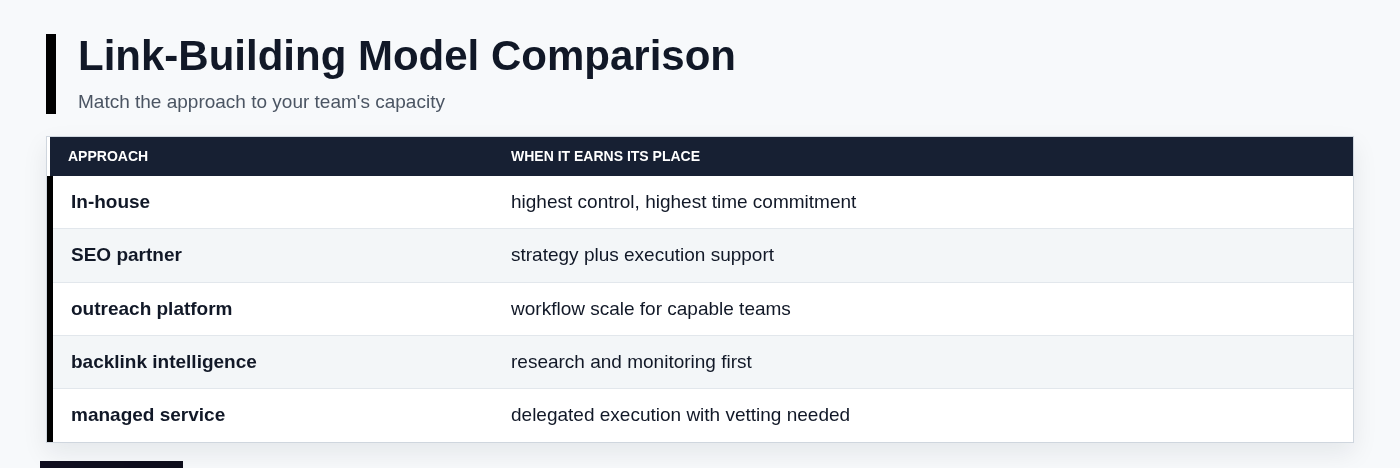
Build links in-house when you have subject-matter expertise, a credible content pipeline, and enough time to research prospects and maintain relationships. This route offers the most control and can create durable connections with publishers, customers, partners, and industry experts.
Use software or external support when prospecting, outreach capacity, campaign reporting, or technical analysis has become the bottleneck. The best alternative depends on the maturity of your program: a new site may need foundational content and technical work first, while an established brand may be ready for digital PR, resource-link outreach, or scalable relationship management.
Why Quality Links Still Matter for Organic Visibility
A relevant link can do more than pass a vague notion of authority. It can expose a page to a new audience, give search engines another route to discover it, and reinforce that your content belongs in a particular topic area.
For example, a cybersecurity software company cited in a respected IT publication's guide to breach response may gain a useful editorial signal, qualified referral visits, and a relationship with a publisher its buyers already trust. That can be more valuable than a link from a high-metric lifestyle site with no connection to security or business software.
Topical relevance matters because search engines try to understand context, not merely count endorsements. A good link can support commercial outcomes indirectly: it may strengthen visibility for a useful landing page, bring visitors with real intent, and help the wider site build credibility around its core subjects.
How to Evaluate a Link Before You Pursue It
Before adding a prospect to an outreach list, ask whether the link would make sense if search engines did not exist. If the answer is no, the placement is probably not worth much effort or risk.
- Topical relevance: Does the publication cover your industry, audience, problem, or an adjacent subject?
- Editorial discretion: Would a real editor, writer, or site owner decide whether to include the link?
- Linking-page quality: Is the specific page useful, current, indexed, and written for readers rather than search manipulation?
- Placement: A contextual citation within the main content is usually more meaningful than a footer, author bio, or crowded resource list.
- Anchor text: Natural wording is safer and more credible than forced exact-match keyword anchors.
- Traffic potential: Could a relevant person reasonably click the link and find your destination page helpful?
- Destination-page usefulness: Does the page you want linked answer the question the referring page raises?
Metrics such as Domain Rating and Authority Score can help prioritize research, but they are directional estimates from third-party tools, not Google ranking factors. Treat them as filters, not proof that a link is valuable.
The Main Alternatives to Doing Link Building Entirely In-House
The central decision is how much of the process your team should own. In-house work gives you the closest connection to product expertise and brand voice, while outside support can add systems, capacity, and specialist experience.
Judge each model on the same basics: strategic direction, prospecting, outreach, relationship management, monitoring, reporting, cost structure, and risk control. No model fixes a weak offer or a page with nothing worth citing.
Comparison Matrix: Link-Building Strategies and Alternatives
| Approach | Hands-on time | Control | Scalability | Best use case | Main limitation |
|---|---|---|---|---|---|
| DIY outreach | High | + | - | Expert teams with time and strong relationships | Can stall when outreach is not a dedicated responsibility |
| SEO/content partner | Medium | + | + | Teams needing strategy connected to content and technical SEO | Requires close alignment and clear approvals |
| Outreach software | Medium | + | + | Established teams managing repeatable campaigns | Software cannot create a compelling reason to link |
| Backlink intelligence tools | Medium | + | Medium | Competitive research, gap analysis, and monitoring | Insight still needs human judgment and execution |
| Managed link-building service | Low | Medium | + | Teams that need delegated production and outreach | Provider quality and acquisition methods vary widely |
Strategy 1: Earn Links With Assets Worth Referencing
The strongest outreach starts before the first email. Create an asset that gives another site a legitimate reason to cite you: original research, an expert-led guide, a maintained statistics page, a free calculator, a visual explainer, or a resource that solves a recurring problem better than existing options.
Originality does not always mean commissioning a large survey. A well-documented benchmark from your own product data, a clear comparison based on first-hand testing, or a genuinely useful template can be enough when it fills a visible information gap.
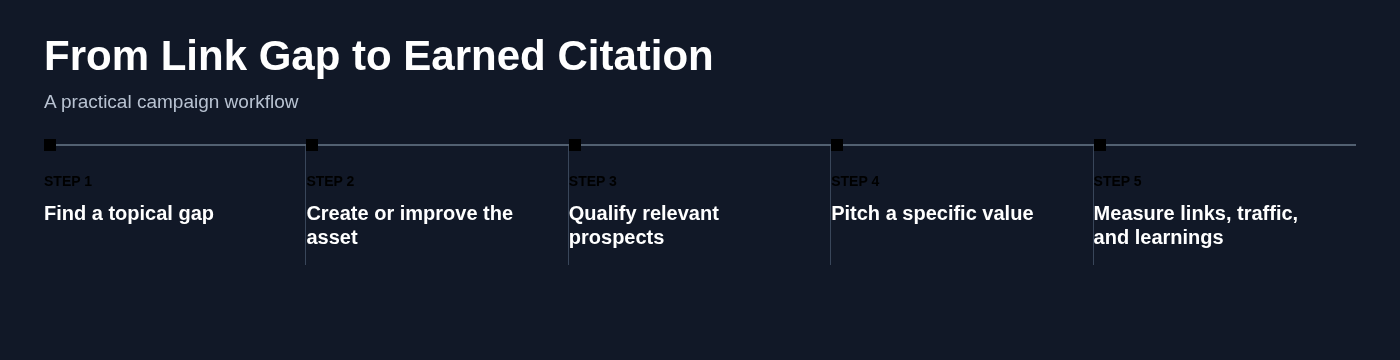
Use a simple workflow: identify the audience you want to reach, build an asset that solves a problem for that audience, then pitch publishers who already cover that problem. The pitch should explain the specific editorial value, not simply announce that you have "great content" for them to link to.
Strategy 2: Reclaim and Convert Existing Opportunities
Many viable links are already close to your business. Start with unlinked brand mentions, references to your founders or research, supplier and partner pages, relevant industry lists, and community discussions where a citation would genuinely improve the answer.
Broken-link outreach and outdated-resource replacement can work too, but only when your page is a better replacement. Pointing out a dead resource without offering a closely matched, useful alternative is not helpful outreach; it is just a template with a broken URL inserted.
Keep messages short and tailored. Mention the exact page, explain the issue or gap, and make a clear case for why your resource helps the writer's readers. That approach may earn fewer superficial replies than mass sending, but the positive responses tend to be more valuable.
Strategy 3: Use Digital PR for Authority-Relevant Coverage
Digital PR earns links by creating or contributing to stories that publications already want to cover. That may involve proprietary data, a timely industry benchmark, a useful expert comment, a regional trend, or a strong reaction to a news event that affects your market.
The best campaigns pair a credible story with evidence. A claim about changing buyer behavior needs data; a prediction needs identifiable expertise; a visual story needs a clear methodology. Editors can spot manufactured news hooks quickly.
This method can secure high-quality editorial coverage, but it is resource-intensive and less predictable than a simple resource-page campaign. Not every story lands, and broad coverage is not automatically valuable if the audience has little connection to your business.
Strategy 4: Build a Focused, Ethical Outreach System
Effective outreach is a repeatable operating process, not an email blast. Begin by defining the topics, pages, and kinds of publications that matter most, then build a prospect list narrow enough for real qualification.
- Set topical targets and map them to useful destination pages.
- Build prospect lists from relevant publishers, communities, partners, and competing citations.
- Validate relevance, audience fit, editorial quality, and the contact's role before sending.
- Personalize the pitch around a specific value proposition.
- Follow up sparingly, record outcomes, and use reply patterns to improve the next campaign.
Governance matters. Use a real identity, give recipients a straightforward way to decline future contact, and do not scrape or spam people simply because their address is technically available. A small, relevant list with a credible message beats a large list with an automated sequence.
Tools and Services: What Each Alternative Actually Solves
Tools can help you discover prospects, compare backlink profiles, organize contacts, send outreach, and monitor earned links. They do not replace a credible asset, editorial judgment, or a team capable of responding thoughtfully when a publisher engages.
The options below solve different parts of the workflow. Choose based on the constraint you need to remove, rather than buying a platform because it promises "more backlinks."
Dixika
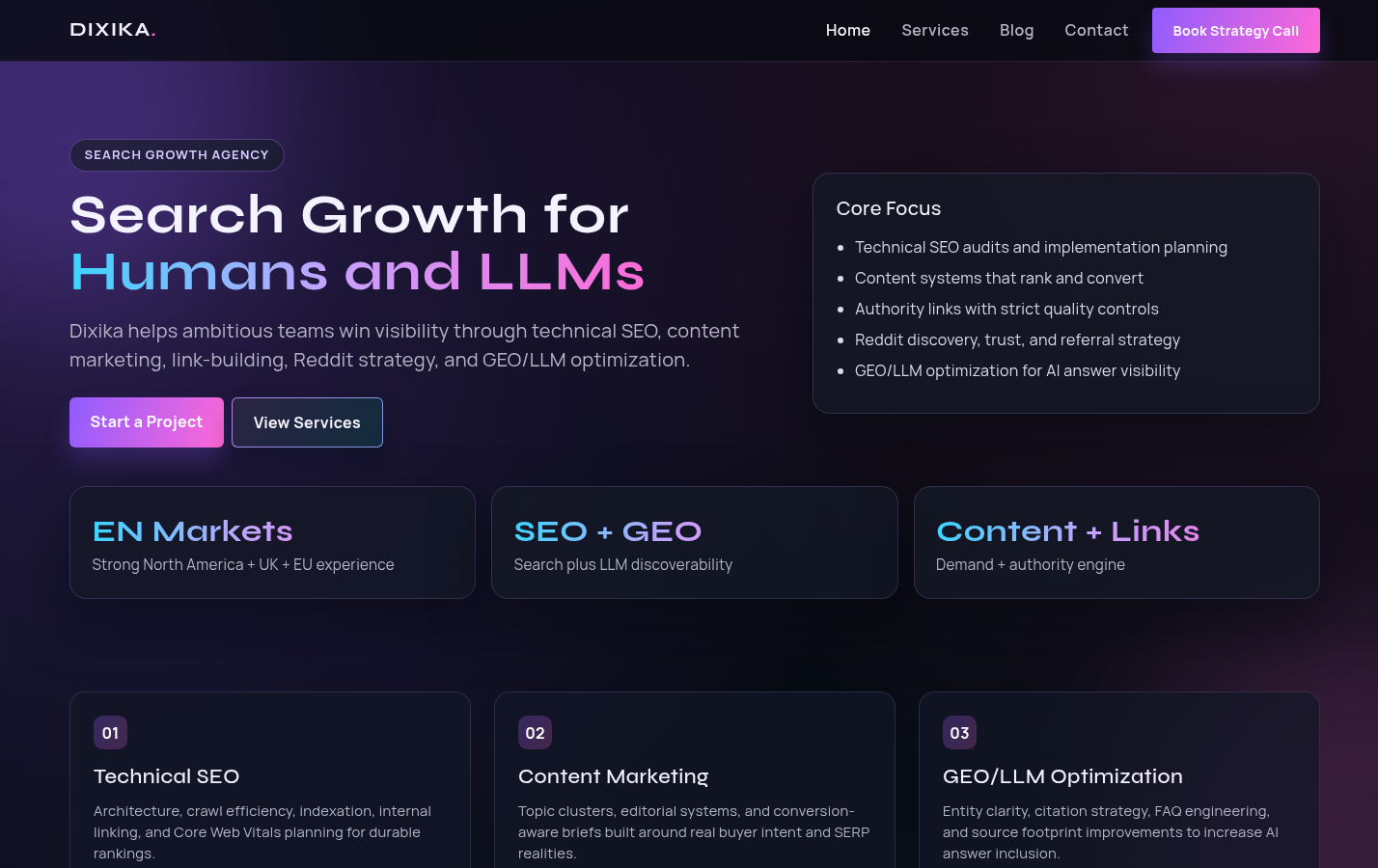
Dixika's services are suited to teams that need link building coordinated with technical SEO, content systems, Reddit discovery, and work aimed at improving visibility in AI-generated answers. That broader approach can matter when the issue is not simply outreach volume, but whether the site has clear entities, useful destination pages, sound technical foundations, and content worth citing.
Its strength is strategic support combined with execution across connected search-growth activities. The trade-off is straightforward: it is a partner-led service model, not a self-serve database for a team that only needs prospect lists and email workflow.
Ahrefs
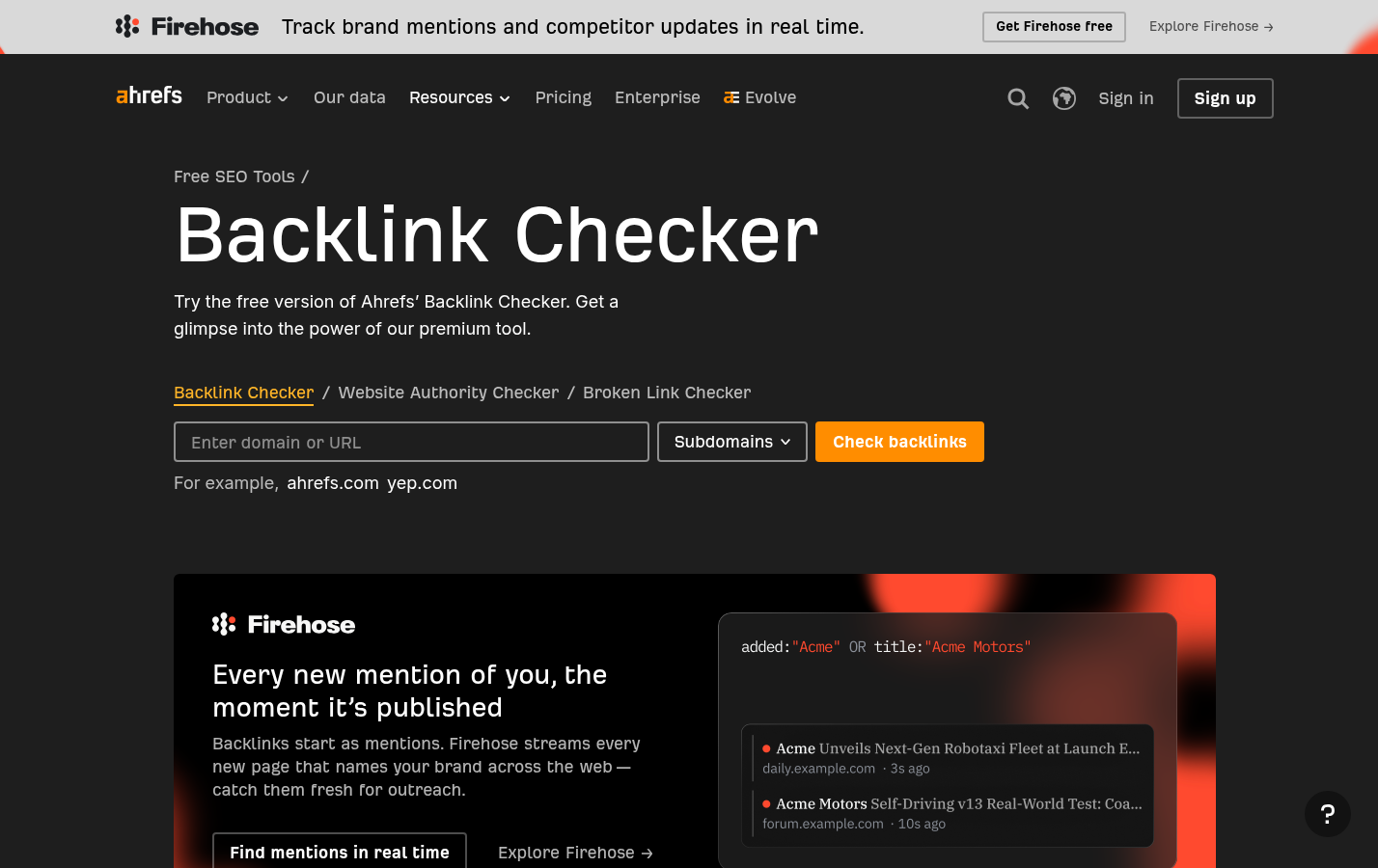
Ahrefs is primarily a backlink research and competitive gap-analysis option. Teams can inspect referring domains, review links pointing to competitors, identify pages that attract citations, and use that intelligence to prioritize content and prospecting opportunities.
It is especially useful for SEO teams that need to understand what is already working in a market before launching outreach. Its limitation is that the platform supplies intelligence, not relationships: a team still needs a relevant offer, qualified contacts, and an outreach process to turn findings into earned links.
Semrush
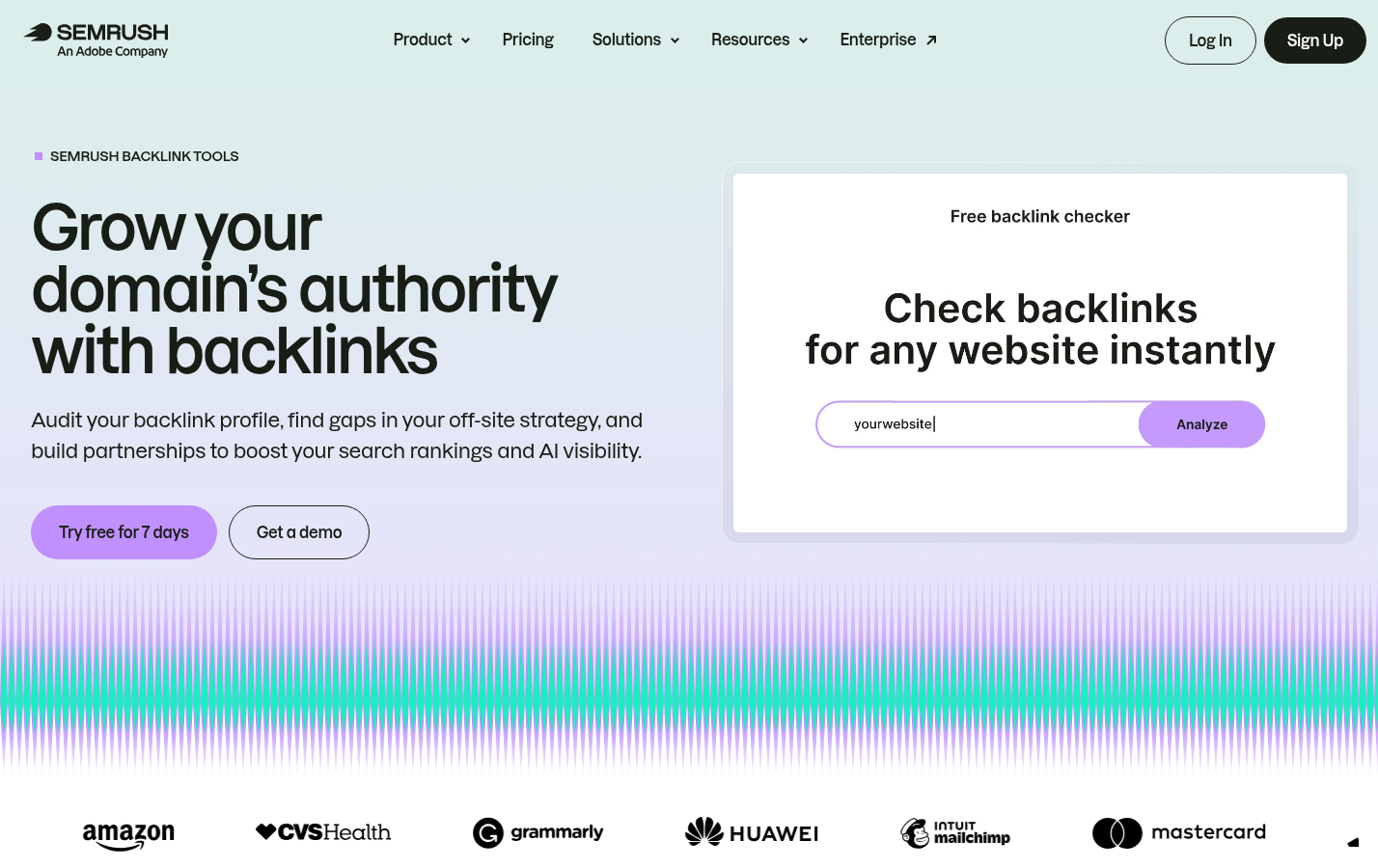
Semrush provides backlink analytics, competitor research, and monitoring within a broader SEO suite. It can be a practical choice for teams already using one integrated platform for keyword research, technical audits, content work, and competitor tracking.
Its backlink data is useful for spotting gaps and changes, but database signals require manual review. A domain that appears promising in a report may still be irrelevant, low quality, or a poor editorial fit for your particular pitch.
BuzzStream
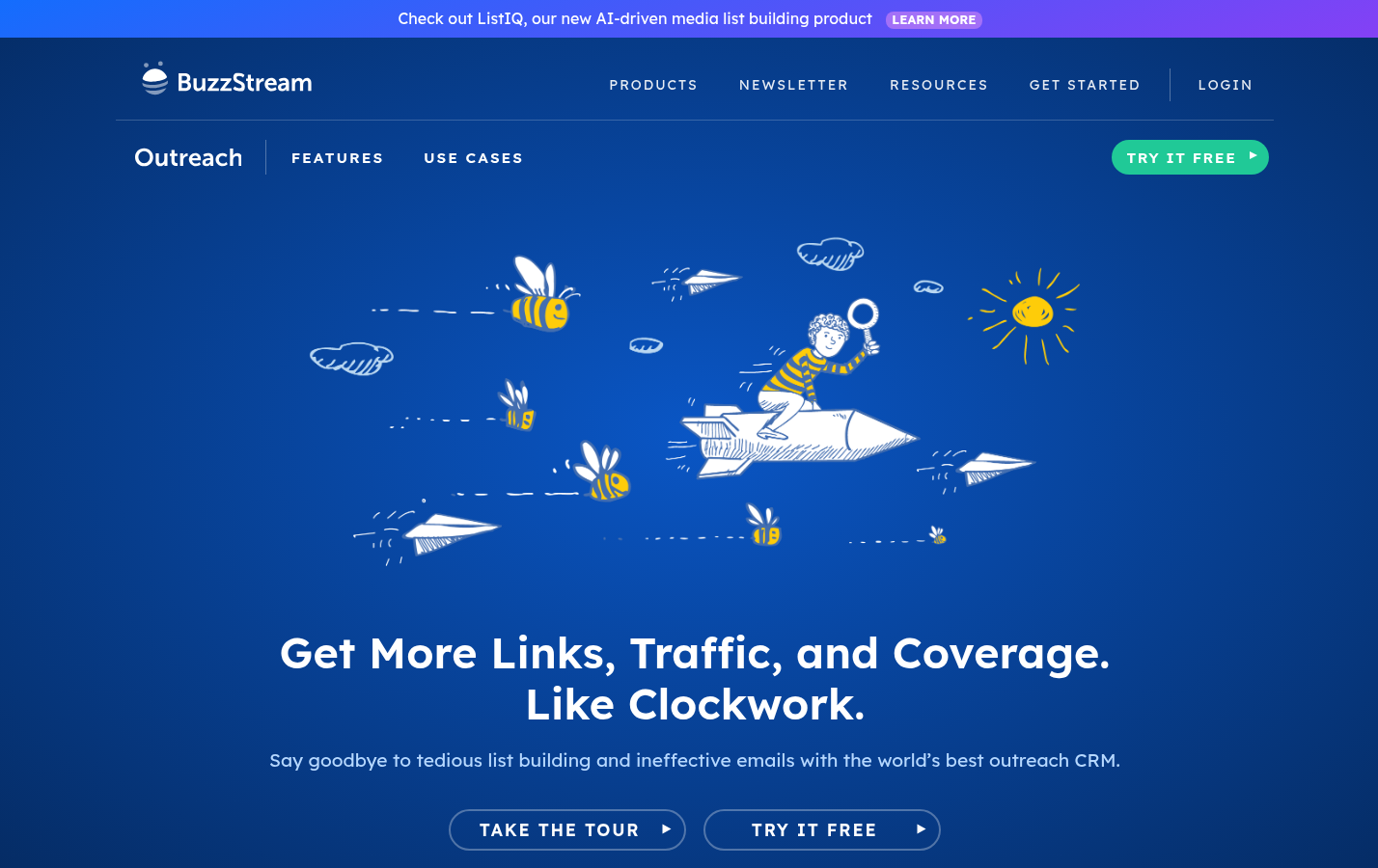
BuzzStream is an outreach CRM built around prospect research, contact management, email sequences, and campaign accountability. It is a strong fit for teams that have defined their audience, built assets worth promoting, and need better operational discipline across outreach.
The limitation is not technical; it is strategic. Organizing a weak list and automating a generic message only makes poor outreach more efficient, so quality control has to happen before prospects enter the campaign.
Pitchbox
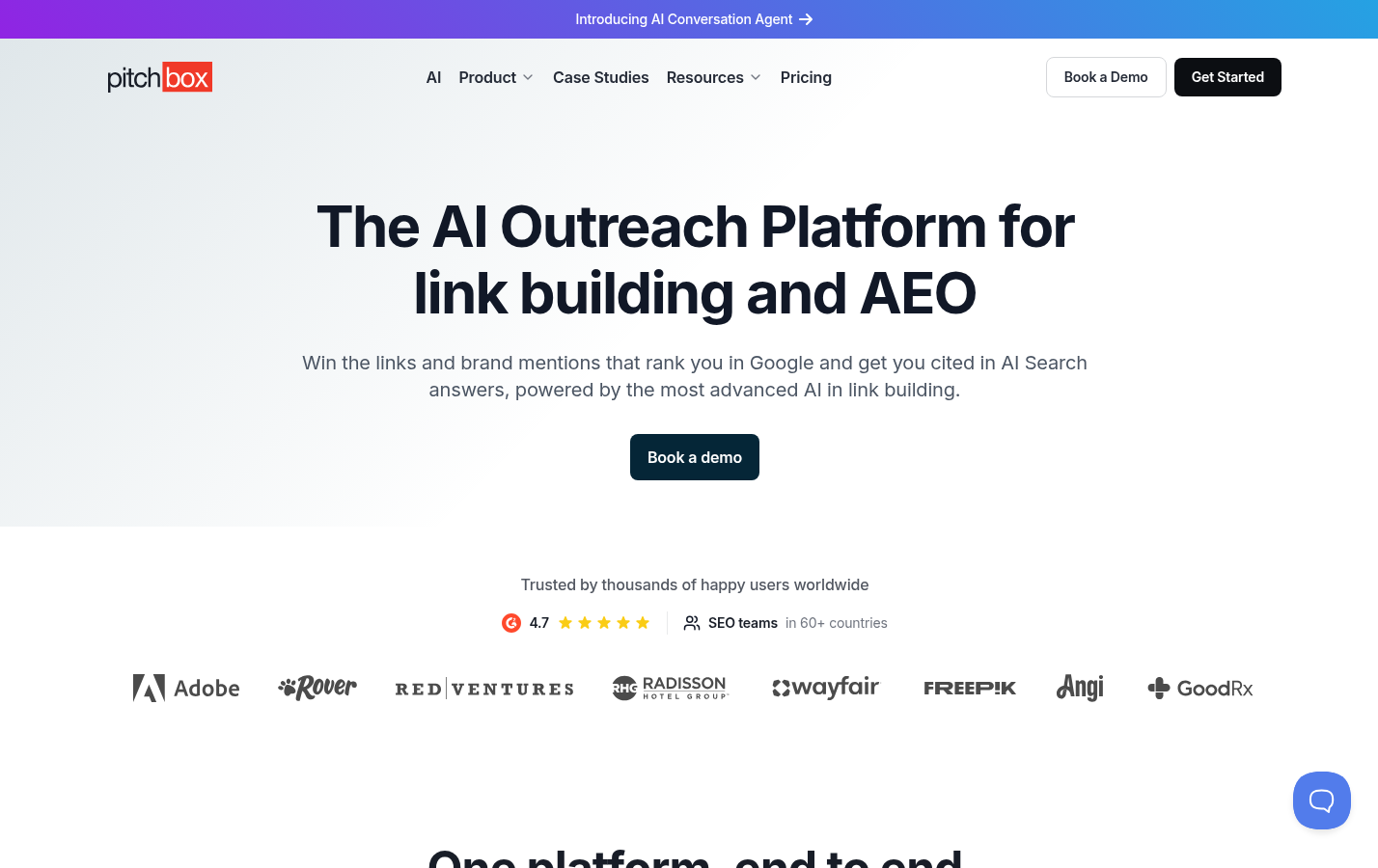
Pitchbox is designed for structured outreach and link-building workflows, particularly when a team is operating larger campaigns with multiple contributors and repeatable processes. Its workflow support can reduce administrative overhead and help teams maintain consistency across prospecting, outreach, and follow-up.
Scale is also its main risk. If targeting is broad or the pitch lacks editorial value, a more efficient process can amplify the problem. Campaign quality, relevance standards, and human review need to be governed upstream.
How to Vet a Link-Building Agency or Managed Service
A credible provider should be able to explain how links are acquired, what prospect standards it applies, and how you retain approval over sensitive placements. Ask to see the actual reporting format, including live URLs, target pages, placement context, and the method used to earn each link.
Look for transparent relevance standards and realistic expectations. Good providers discuss the work required to create strong assets, explain that editorial decisions are outside their control, and report on quality rather than hiding behind a single authority metric.
- Ask whether prospects are manually reviewed for topic and audience fit.
- Confirm whether you can approve targets, content, and outreach positioning.
- Request reporting that identifies live URLs, not just aggregate counts.
- Ask how paid placements, sponsorships, and nofollow or sponsored attributes are handled.
- Clarify how the provider responds when a campaign underperforms.
Red flags include guaranteed rankings, undisclosed networks, bulk packages without topical review, paid links presented as editorial, and reports limited to vanity metrics. If a vendor cannot show how the work creates value for readers, it is unlikely to create durable value for your site.
Link-Building Tactics to Avoid - and Better Replacements
Buying links, using private blog networks, automating comment or forum placements, forcing irrelevant guest posts, arranging excessive reciprocal links, and manipulating exact-match anchor text are shortcuts with poor long-term economics. They can waste budget, clutter a backlink profile, create manual-action risk, and fail to send a single useful visitor.
Replace purchased placements with resource outreach, partner citations, expert contributions, and digital PR rooted in real evidence. Replace automated forum links with useful participation in communities where your team can answer questions honestly and link only when it adds material context.
Replace exact-match anchor demands with natural editorial language. A publisher should be able to describe your resource in the words that best serve its readers; trying to script every anchor is a sign that the campaign is optimizing the wrong thing.
Measure Link-Building Results Beyond Domain Metrics
A sensible scorecard combines link quality, campaign activity, and business outcomes. Count qualified referring domains, but also track topical relevance, the specific pages earning links, referral visits, link retention, target-page impressions, rankings, and conversions where attribution is meaningful.
Separate leading indicators from lagging outcomes. Qualified prospects, positive replies, editorial conversations, and content engagement show whether the campaign is functioning now; organic traffic and rankings often take longer and are influenced by many factors beyond a single link.
Review outreach performance weekly or monthly, then assess broader organic movement on a quarterly cadence. Use the findings to improve assets and targeting: if the right publishers reply but do not link, the resource may need a clearer citation-worthy angle; if nobody replies, your audience fit or pitch likely needs work.
Choose a Link-Building Approach You Can Sustain
Pick DIY outreach if your team has deep topic expertise, credible resources to promote, and time to build relationships carefully. Pick research and outreach tools if you already have an internal workflow and need better intelligence, tracking, and operational consistency.
Pick digital PR if you have distinctive data, strong experts, or timely stories that can earn broader editorial coverage. Pick a partner when you need strategy and execution tied together across content, technical SEO, authority building, and the changing requirements of AI-driven search visibility.
Teams that want link building connected to the rest of their search-growth program can assess whether Dixika's services are an appropriate fit. The right choice is the one your team can run ethically, measure honestly, and improve over time.