Links are still one of the clearest signals that a page is worth referencing. But the old playbook of chasing high volumes from any site with a metric is not just ineffective - it can distract a team from work that actually improves rankings, referral traffic, and trust.
What SEO Link Building Is - and Why It Still Matters in 2026
SEO link building means earning or acquiring hyperlinks from other websites to your pages. Those links help search engines discover content, understand topical relationships, and assess whether a page has earned attention from credible sources. In 2026, link building remains relevant, but editorial judgment, topical fit, useful destination pages, and real audiences matter far more than raw link volume.
The 12 link building strategies below are selected for four practical reasons: they are repeatable, defensible, valuable to the linking site, and measurable by an in-house SEO team or agency. The goal is not to manufacture votes. It is to give publishers a genuine reason to reference your work.
1. Create Citation-Worthy Original Research and Data Assets
Original research is one of the most durable ways to earn links because it gives other writers something they cannot easily recreate. Surveys, proprietary benchmarks, aggregated customer data, industry trend reports, and well-documented experiments can all become reference material for journalists, bloggers, analysts, and partner publications.
A strong link building example is an annual benchmark report based on first-party data. A B2B software company might publish anonymized findings on implementation time, adoption rates, or operational outcomes across customer segments. If the methodology is clear and the takeaways are useful, industry writers can cite the report for months rather than treating it as a one-time announcement.
Do not publish a report and wait for links to appear. Update it when new data is available, create useful charts and quotable findings, pitch relevant reporters and publishers, and make the source page easy to verify. The best data assets answer a question people are already trying to support with evidence.
2. Build Links to Pages With a Clear Ranking and Revenue Case
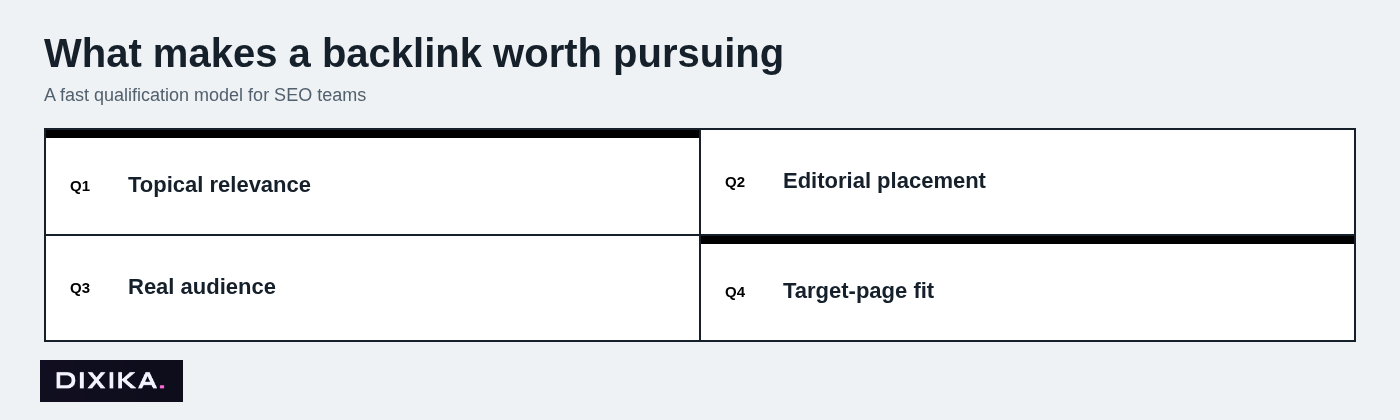
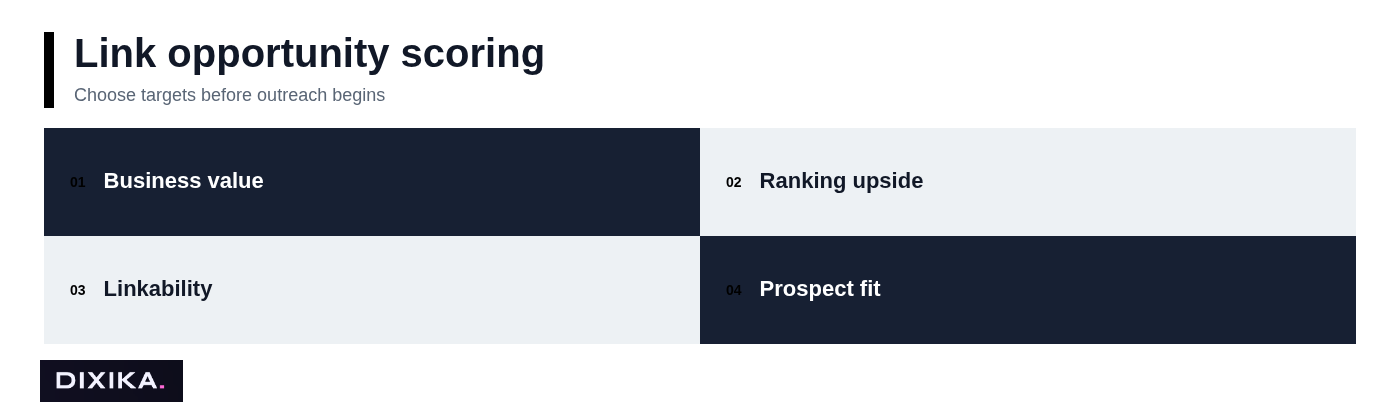
Many campaigns fail before outreach starts because the team has not decided which page deserves links. Sending every prospect to the homepage wastes relevance. A link should usually support the page that has the strongest combination of commercial importance, ranking potential, and evidence that external references could help it compete.
Start with pages that already receive impressions, rank just outside the strongest results, serve a valuable query cluster, and have a visible referring-domain gap against relevant competitors. A service page, category page, comparison guide, or high-intent resource can all be legitimate targets if the pitch matches its search intent.
Create a short brief for each target URL before prospecting:
- Audience and query cluster: Define who searches for the page and the questions it must answer.
- Differentiators: Identify the expertise, proof, methodology, or perspective competitors do not offer.
- Supporting evidence: Note data, examples, case studies, or expert input that makes the page reference-worthy.
- Ideal referring domains: List the publisher types most likely to have a natural editorial reason to link.
3. Turn Broken External Links Into Better Replacement Resources
Broken link building works when it is treated as a service, not a template. Find relevant resource pages, articles, and tools pages that point to unavailable external content. Then build or improve a replacement that genuinely helps the publisher repair a poor reader experience.
Google search operators and competitor backlink research can surface broken-link opportunities, but the replacement page comes first. If a publisher linked to an outdated guide on technical audits, your substitute should be genuinely current, detailed, and aligned with the original context - not a loosely related sales page.
In your outreach, identify the dead link precisely, explain why the replacement matches the surrounding section, and make it easy for the editor to evaluate. Generic broken-link emails sent at scale get ignored because the sender has not done the editorial work.
4. Reclaim Unlinked Brand, Product, and Data Mentions
Unlinked mentions are often among the highest-efficiency link building opportunities available. Someone has already chosen to mention your company, founder, research, product, image, or proprietary framework. The task is to identify mentions where a link would make the content more useful for readers.
Not every mention deserves outreach. Ignore scraper sites, irrelevant directories, and pages where adding a link would feel forced. Prioritize editorial content that discusses your work in context and gives readers a plausible reason to learn more.
Keep the request simple: thank the author, point to the relevant mention, and suggest the exact URL that verifies or expands on the claim. A request to link to the original research source, for example, is usually stronger than asking for a generic company homepage link.
5. Use Competitor Link Gaps to Find Proven Prospect Types
Competitor backlink analysis is useful when it reveals patterns, not when it produces a giant spreadsheet. Look for the pages competitors earn links to and ask why publishers cite them. Are they publishing a tool, a benchmark, a visual explainer, a regional guide, or a clear comparison resource?
Then create a stronger reason to cover your version. That could mean fresher data, a better template, a regional angle, an expert interpretation, clearer documentation, or a resource that solves a missing part of the problem. Copying a competitor's asset rarely creates an editorial reason to switch attention to you.
Use link building tools to identify candidate domains, but review every prospect manually for topical fit, editorial standards, and audience relevance. A referring-domain export is research input, not a bulk outreach list.
Ahrefs
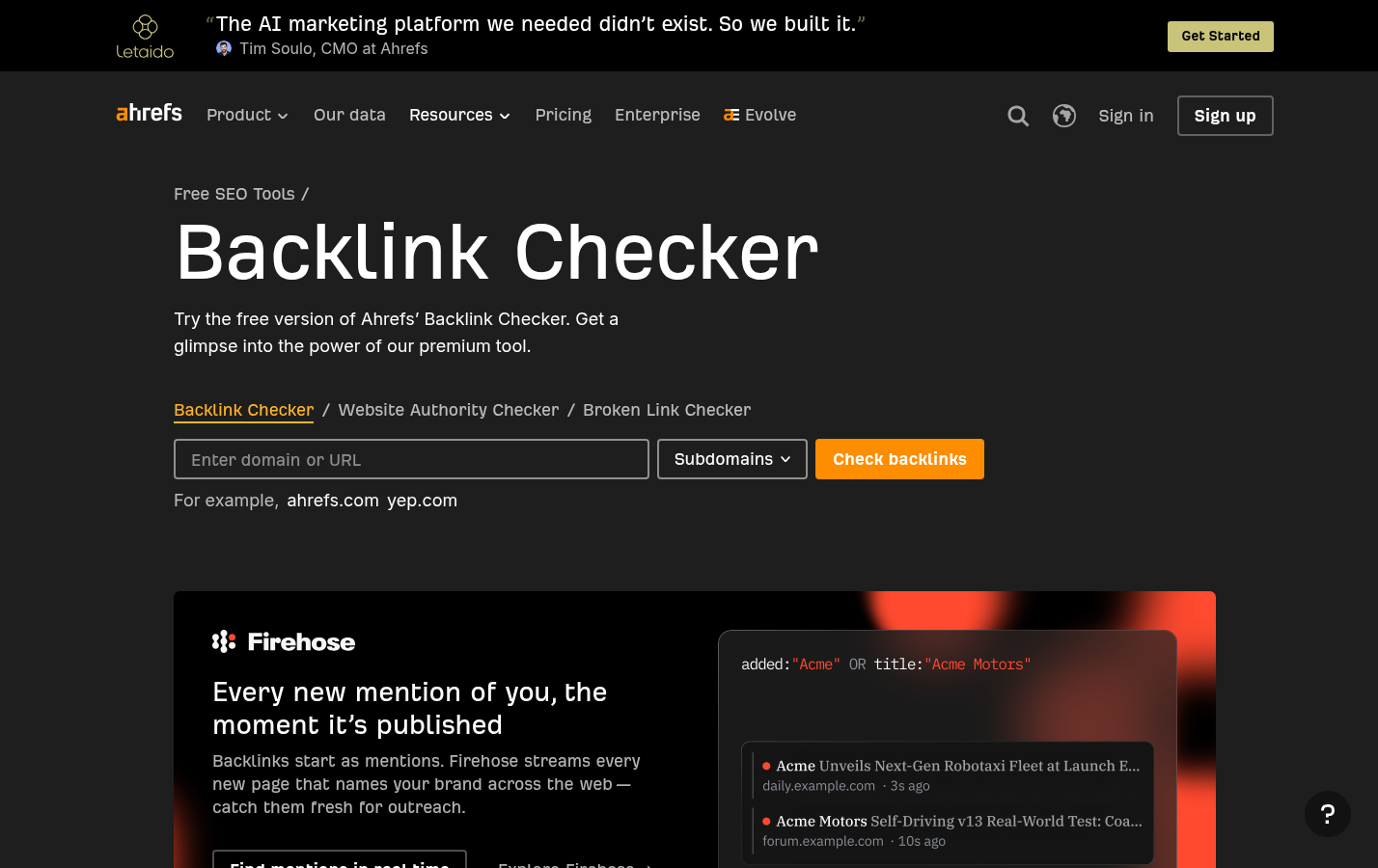
Ahrefs' Backlink Checker is particularly useful for quickly examining competitor referring domains and the pages that attract attention. It can help a team move from "our competitor has more links" to a more useful question: "Which publisher types cite useful resources in this topic, and what would they need from us?"
The limitation is that backlink data alone cannot tell you whether a placement was earned editorially, whether the site is worth approaching, or whether your target page deserves a link. Choose it when you need fast competitive prospect research, then add human review before outreach begins.
6. Earn Editorial Links With Expert Commentary and Digital PR
Digital PR earns the best results when experts contribute something a publication actually needs: a sharp explanation, a credible data point, a timely opinion, or a practical counterpoint. Journalist requests, expert roundups, industry publications, and carefully selected contributor opportunities can all lead to meaningful editorial links.
Do not lead with "we would love to write a guest post." Lead with a specific idea. For example, an SEO lead could explain why AI-generated content is not the real risk for most brands; unverified claims, weak source material, and pages without first-hand insight are the bigger problems. That is a usable angle, not a generic credential.
Qualification matters. A publication should have a genuine audience, a relevant topic area, clear editorial standards, and appropriate disclosure practices. A link from a respected niche publisher can be worth more than dozens of irrelevant placements.
7. Build Free Tools, Templates, and Practical Resources People Reuse
Free link building strategies work best when the free resource saves people time. Calculators, templates, checklists, directories with real verification standards, implementation guides, and interactive explainers can earn links because readers return to them and publishers want to share useful shortcuts.
Validate the idea before building it. Review sales calls, support tickets, community discussions, internal search data, and search results for recurring tasks that people struggle to complete. A simple, accurate template that solves a known workflow problem is often more linkable than an expensive interactive tool nobody asked for.
Assign an owner and an update schedule. Resource pages lose citation value when their advice, examples, or data becomes stale. Maintenance is part of the link strategy, not an afterthought.
8. Run Value-First Outreach Instead of Mass Email Blasts
Outreach volume is a poor primary KPI. The real question is whether your message gives an editor a credible reason to care. A good pitch reflects the prospect's existing coverage, identifies a relevant gap, and explains the specific value your resource adds for their readers.
For each asset, build a distribution plan that includes direct outreach, partner contacts, newsletters, communities, social posts, and contributor channels where appropriate. Different assets travel through different networks; a research report may fit journalists and analysts, while a template may be better suited to practitioner communities and resource roundups.
Track replies, placements, and qualified referral traffic by angle. If one data point consistently earns interest while another gets ignored, improve the distribution strategy rather than simply sending more emails.
9. Turn Partnerships and Integrations Into Earned Mentions
Partnerships can create natural links when both audiences benefit from the reference. Integration directories, supplier relationships, professional associations, customer stories, event collaborations, and co-marketing initiatives all create opportunities - but only when the public page is useful.
Joint research, implementation guides, webinars, and case studies give partners a legitimate editorial reason to link. A well-produced integration guide, for instance, can help shared customers understand a workflow while making both companies easier to discover.
Avoid indiscriminate reciprocal linking. Relevant, occasional editorial reciprocity is normal on the web. Repeated exchanges with unrelated sites are not a sustainable link building strategy and rarely serve users.
10. Participate in Niche Communities to Discover and Earn Links
Communities are valuable because they reveal how people actually describe their problems. Participate in industry forums, professional groups, communities, and relevant discussions to identify objections, resource gaps, examples people trust, and language worth using in your content.
Do not join communities to drop links. That approach is obvious, unwelcome, and often violates platform rules. Instead, contribute useful answers, share first-hand experience, and build a reputation for being helpful. Where links are permitted, use them only when the destination directly answers the question better than a short reply can.
This is especially useful for teams building Reddit strategy or community-led discovery programs. The goal is not a quick backlink; it is better audience intelligence and a legitimate path to future references.
11. Create Linkable Local, Industry, and Use-Case Pages
Specificity can make a page more useful and more linkable. A page for a location, industry, role, or use case can earn attention when the offering, proof, examples, and advice are meaningfully distinct from the rest of the site.
A cybersecurity consultancy serving financial firms, for example, may create a resource for compliance teams that includes relevant risks, implementation considerations, and specialist examples. That is more useful than a generic service page with a financial-services heading added to it.
Build relationships with local organizations, trade groups, event hosts, and specialist publishers before requesting coverage. Avoid scaled city or vertical pages with thin copy variations. They are weak pages for users and poor destinations for outreach.
12. Reclaim Lost Links and Fix Technical Link Equity Leaks
Before launching a new campaign, inspect what your site has already earned. Lost links can result from deleted pages, broken redirects, incorrect canonicals, content changes, migrations, URL restructuring, or a linking site updating its own content.
Restore a valuable page when possible, or redirect it to the closest relevant equivalent. Do not redirect every broken URL to the homepage; that rarely satisfies the visitor or the publisher's original intent. Contact linking sites only when an update improves their readers' experience.
Measure more than new referring domains. A useful report includes retained links, reclaimed referring domains, ranking movement for target pages, qualified referral traffic, and assisted conversions. Link building in digital marketing should connect to business outcomes, not just a monthly placement count.
How to Prioritize These Link Building Strategies as a Team or Agency
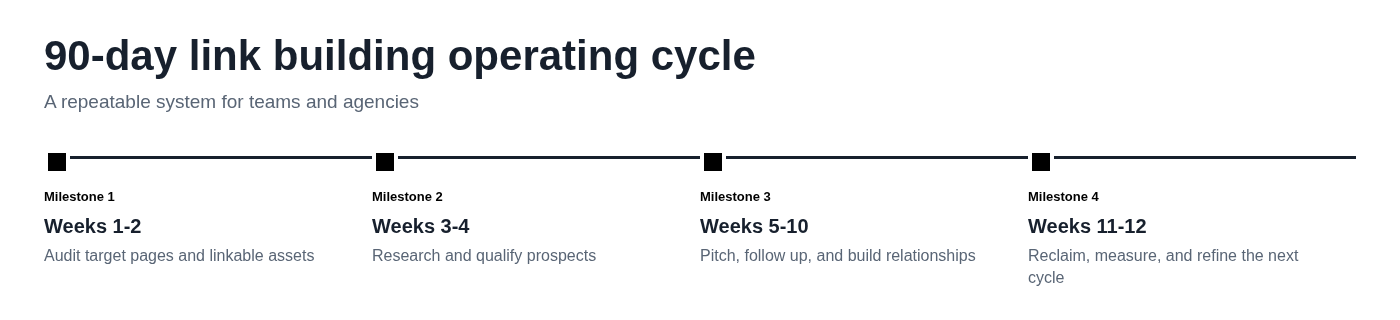
A practical 90-day program is more effective than trying all 12 tactics at once. Begin by selecting a small group of high-value target pages, determining whether each one needs a new linkable asset or better promotion, and building a tightly qualified prospect list.
The 80/20 rule in SEO is useful here: most durable results tend to come from a relatively small group of pages, assets, relationships, and technical fixes. Put most of the effort into the opportunities with clear business value and a plausible path to being referenced, rather than spreading resources across dozens of low-priority URLs.
If you need the top three link building strategies for most teams, start with original research, expert-led digital PR, and existing-asset reclamation. Together, they combine authority, relevance, and repeatability without relying on low-quality placements.
The top five SEO strategies more broadly are solid technical foundations, pages built around genuine search intent, first-hand and well-supported content, earned links and mentions, and ongoing measurement tied to conversions. Links matter, but they cannot rescue a slow, poorly structured site or a page that does not satisfy the query.
Where AI Fits - and Where It Does Not - in Modern Link Building
SEO is not being replaced. Search visibility is expanding to include AI answer visibility, GEO, community discovery, and audience trust signals. Strong technical foundations, useful content, clear entities, and earned third-party references still support discoverability across that broader mix.
ChatGPT can assist with SEO work. It can help organize prospect research, clean data, produce pitch variants, summarize pages, identify content gaps, and draft initial content briefs. It cannot reliably determine whether a prospect has editorial quality, verify claims, build a real relationship with a publisher, or decide whether a link improves the reader experience.
The 3-7-27 rule in marketing is often used as a reminder that people may need repeated exposure before they recognize, remember, and act on a brand message. The precise numbers should not become a planning formula. In link building, consistent useful exposure through credible publishers and communities matters more than counting touches.
Keep ethical Google link building separate from manipulation. Buying low-quality placements, automated comment or forum spam, irrelevant link exchanges, and private network schemes create avoidable risk. A short-term metric increase is not a substitute for links that withstand editorial scrutiny.
Build a Link Program Around Assets Worth Referencing
The central principle is simple: earn links by creating pages and sharing expertise that make another publisher's content more useful. The best campaigns do not ask editors for favors; they give editors a better source, a stronger example, or a resource their readers can use.
Start small. Choose one high-value target page, identify one strong asset or reclamation opportunity, run a measured outreach cycle, and learn from the response. That process is more reliable than chasing every link building website or copying whatever tactic appears popular this month.
Teams that need an integrated program spanning SEO, content, link building, Reddit strategy, and AI-answer visibility can explore Dixika or review our services.